


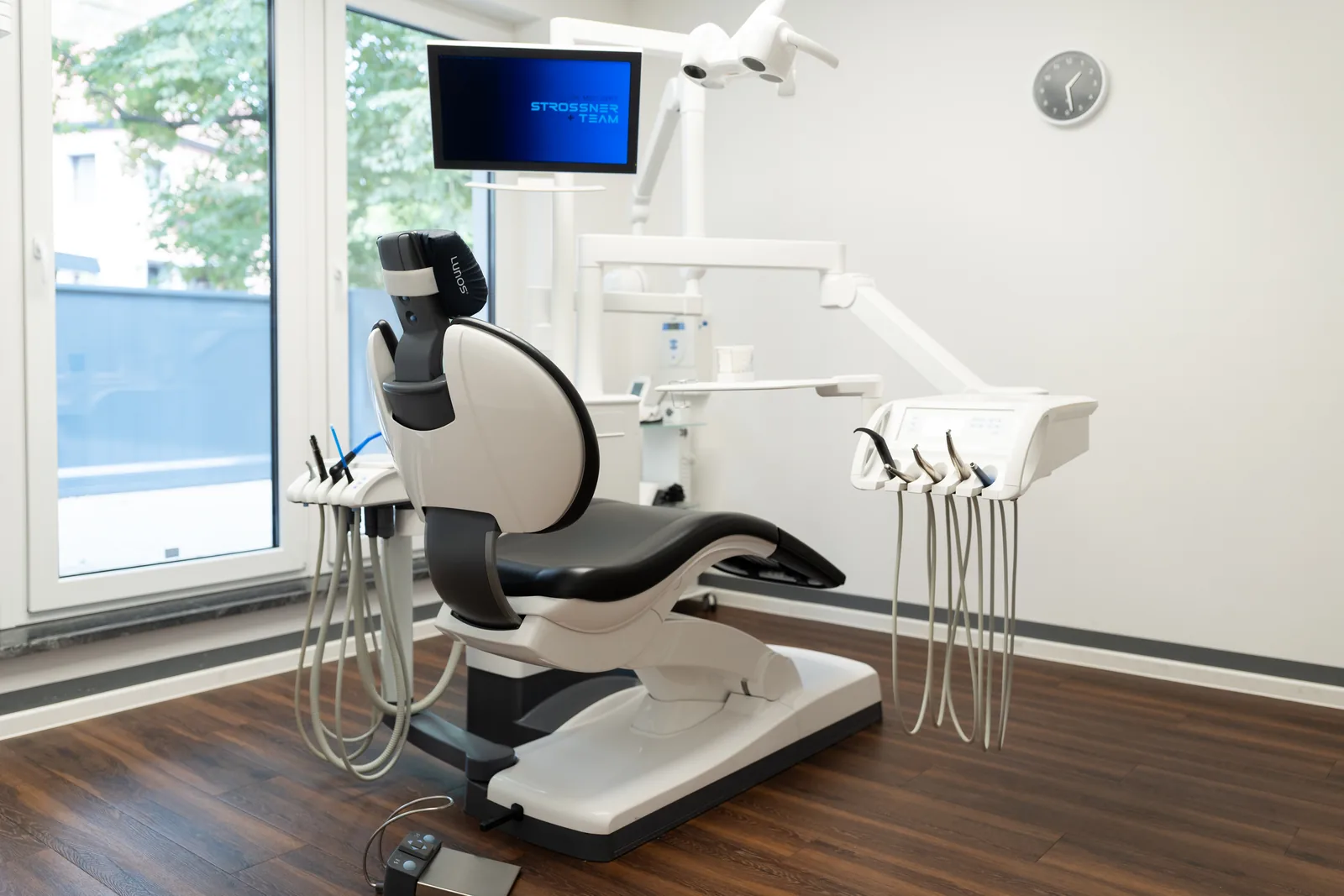
Our Medical Technology
From X-ray to finished tooth, with no detours
For us, digital does not mean “modern for technology's sake” – it means fewer impressions, fewer appointments and fewer surprises.
Who treats you
Dr. med. dent. M.Sc. Sandro Strößner – working in implantology since 2013 · M.Sc. in Oral Implantology and Periodontology – together with the team at Zahnkompetenzzentrum Weißenfels.
First Appointment
Consultation, medical history and examination (3D X-ray if needed) – we plan first and treat later. A pure information meeting without examination is non-binding; the examination and the cost plan are charged according to the GOZ fee schedule.
Costs
A written treatment and cost plan before treatment begins; an initial, non-binding price range is provided by the cost calculator further down.
First Step
Appointments online around the clock (“Appointment” button) or by phone during opening hours on 03443 339 65 54.
“We look after people — with patience, precision and dentistry that keeps the whole picture in view.”
The Principle
Cone-beam CT scan, intraoral scans, structured assessment. The first appointment isn't treatment — it's a conversation backed by data.
From the final dental prosthesis back to the surgery. What should exist at the end determines the first step — not the other way round.
One team under one roof: surgery, prosthetics, laboratory.
Our Medical Technology
For us, digital does not mean “modern for technology's sake” – it means fewer impressions, fewer appointments and fewer surprises.
01
03
05
Getting to us: book an appointment online or call. We are happy to discuss financing options.
Short videos in which our team answers the questions we're asked most often. No jargon, no sales pressure.
The videos provide general information and do not replace individual advice or examination. The course and outcome of treatment depend on personal circumstances; medicine offers no guarantee of success. All videos have subtitles.
WHY NOW
When a tooth is lost, or it becomes clear that it can no longer be saved, a process begins in the jaw that cannot be stopped but can be favourably influenced by acting early. A natural tooth root transmits pressure to the bone during chewing and thereby keeps it in shape. As soon as this stimulus is missing, the bone at the affected site gradually recedes. This loss can be especially pronounced in the first few months after losing a tooth. Anyone who considers an implant-supported restoration early therefore often has better starting conditions than if months or years pass unused.
This is exactly where the idea behind implantat.jetzt comes in: it is not about rushing into treatment, but about not losing valuable time – neither before the first consultation nor between the individual treatment steps. Many people put off going to the practice because they fear a long, drawn-out procedure.
At the Zahnkompetenzzentrum Dr. med. dent. M.Sc. Sandro Strößner in Weißenfels, we value a streamlined, well-timed sequence of appointments: a consultation, diagnostics, and a clearly planned course of treatment in which each step follows sensibly on from the last. Speed is not an end in itself. It results from the fact that consultation, diagnostics, surgery, and prosthetic treatment come together at one location with us, so there is no need to travel between different practices. In this way, the time the body needs for healing anyway can be separated from avoidable organisational waiting times.
Starting treatment early gives you and us more room to manoeuvre. As long as the available bone is still favourable and the tissue healthy, more treatment routes are often open – including approaches where individual steps can be combined in time. The longer a gap remains, the more likely additional bone augmentation becomes necessary, which extends the overall treatment. Acting early therefore means not only a faster result, but often also a simpler route to get there.
Honesty matters to us here: fast does not mean equally fast in every situation. Some situations allow for a swift start, while others deliberately call for a pause to allow healing. We clarify what is realistic in your case after the examination – with the aim of not making you wait any longer than is medically sensible.
IMMEDIATE IMPLANT PLACEMENT
The classic approach involves letting the wound heal first after a tooth is removed, before placing an implant in the same location. With immediate implant placement, by contrast, the implant is inserted during the same session in which the tooth that could not be saved is removed. The implant uses the fresh socket left by the natural root for anchorage. In favourable cases, this means one fewer operation for patients and an earlier start to the actual restoration.
The appeal of this approach is obvious: instead of two separate procedures with a healing gap in between, one step is saved. However, for this to succeed, certain conditions must be met. What matters is that the implant finds sufficiently firm hold from the start in the remaining bone around the tooth socket – professionals refer to this as primary stability. In addition, there must be no acute inflammation at the site, and the bone walls of the socket should be largely intact.
Whether an implant can be placed immediately can only be assessed after a thorough examination and three-dimensional diagnostics. The shape of the tooth socket, the thickness of the surrounding bone walls, and the condition of the gums all play a central role. In the front tooth area, where aesthetics are particularly important, we weigh up the approach with particular care, as the course of the gumline here has a significant bearing on the later appearance.
If immediate implant placement is not possible, this is not a setback, but a conscious decision in favour of a sustainable result. Sometimes so-called early implant placement is the better approach: the soft tissue heals over a few weeks before the implant is placed – a compromise between speed and biological safety. We discuss openly which of these options is suitable in your case.
The points below summarise what can make immediate implant placement stand out – always provided the individual conditions are right. There is no blanket suitability; it is assessed in every individual case.
IMMEDIATE TREATMENT
Immediate implant placement and immediate restoration are often mentioned in the same breath, but they mean two different things. Immediate implant placement concerns the point in time at which the implant is placed. Immediate restoration concerns when a visible, provisional crown or bridge is fitted onto the implant. Immediate restoration means that you do not have to go home with a visible gap after the procedure, but are already fitted with provisional dental prosthetics.
This provisional restoration is initially an aesthetic and functional interim solution. It closes the gap visually, supports speech, and shapes the gum for the final crown to come. Important to know: an immediate provisional is generally kept out of direct chewing contact at first, or only lightly loaded, so that the implant can integrate undisturbed. The final, fully load-bearing restoration only follows once bone integration is soundly complete.
Especially when a visible front tooth is affected, many people find a visible gap distressing – at work, in their social life or when smiling. For the treatment of a toothless jaw, too, there are concepts in which several implants are placed and promptly connected with a fixed temporary bridge, so that the phase without fixed teeth is avoided altogether or kept very short.
Whether immediate restoration is possible depends decisively on how firmly the implant sits in the bone immediately after placement. Only if this initial stability is sufficient can a temporary restoration be attached responsibly. If it is not sufficient, it is safer to allow the implant an undisturbed healing period first and fit the visible restoration a little later. We base this decision on the examination and on the measurements we take during the procedure – always with the long-term result in mind.
At this point, we deliberately do not want to make any blanket promises about timing. Terms such as “fixed teeth in a day” describe a concept, not a guaranteed outcome. What is achievable in your particular mouth only becomes clear after careful assessment. Our aim is to make the treatment period as pleasant as possible for you – with an honest account of what is possible and what may need more time in an individual case.
THE PROCESS
The following overview shows what implant treatment at the Zahnkompetenzzentrum in Weißenfels can look like. The individual steps interlock, and where medically justifiable, appointments can be combined. The exact order and duration always depend on your personal situation and may vary in individual cases.
The biggest lever for a quicker overall result rarely lies in the procedure itself, but in the organisation around it: short distances between appointments and planning that thinks all steps through in advance. Because surgery and prosthetics work together under one roof with us, findings, images and impressions do not have to be sent back and forth between different places – in practice, this often saves more time than any individual measure.
At the same time, there are periods that cannot be shortened without putting the outcome at risk. Bony healing – osseointegration – needs its biologically necessary duration. Respecting this phase is not a loss of time, but the basis for ensuring that the eventual restoration holds up in the long term. We therefore consistently distinguish between waiting times that we can avoid on your behalf, and healing times that the body needs.
POSSIBLE OR NOT
The most honest part of any consultation about timing is the question of when a swift approach is genuinely responsible. Immediate implant placement and immediate restoration are not procedures that suit every mouth. They depend on requirements that can only be assessed individually. A responsible assessment also means clearly saying when a slower, multi-stage approach is the better choice.
Equally important are the points that argue against a rushed approach. If they are present, this does not mean an implant is impossible – it means that a more considered, multi-stage path leads more safely to the goal. Speed must never come at the expense of stability.
During your consultation at our practice in Weißenfels, we weigh up these points together with you. Sometimes a wish for speed is perfectly compatible with a safe outcome; sometimes we deliberately advise a little more patience. We do not make this recommendation to spin things out, but because an implant that has been allowed to heal calmly benefits you more in the long run than a few weeks gained earlier. We give you the specific arguments relevant to your case, so that you can support the decision on a well-informed basis.
TIMELINES
An honest answer to the question "How quickly will I have a fixed tooth again?" has to keep two things apart: organisational time and biological time. Organisational time – that is, waiting for appointments, diagnostics and planning – can be shortened considerably through good workflows. Biological time – above all, bone integration – follows its own rules and cannot simply be sped up at will. Understanding both allows you to judge the overall duration realistically.
A consultation appointment, diagnostics and a treatment plan bring you to the point at which it is clear what is possible. The actual procedure to place an implant is – taken on its own – usually a manageable outpatient appointment, too. Where immediate implant placement and immediate restoration are suitable, additional waiting phases are eliminated and several steps move closer together in time.
Bone integration generally takes anywhere from several weeks to a few months, depending on the jaw and bone quality. In the lower jaw, the bone is often denser and tends to integrate more quickly than in the upper jaw. If bone augmentation has been carried out, the overall duration increases accordingly, because the augmented area also needs time to mature. Any immediate temporary restoration bridges this phase visually and functionally, but does not remove the need to give the final restoration a stable foundation.
This gives a realistic picture: in suitable cases, the path to the first provisional restoration can be very short – including restoration provided close in time to the procedure. The time until the final, fully load-bearing crown or bridge, by contrast, is however long healing takes. We give you this timeframe as specifically as can responsibly be done, after diagnostics, always noting that the individual healing process can vary.
You should not have to wait because of organisational gaps, but at most because healing requires it. This distinction is at the heart of what implantat.jetzt stands for: swift where speed makes sense, and patient where the body requires it.
APPOINTMENT & COSTS
The first and most important step is a consultation appointment. The easiest way to reach us is by phone on 03443 / 339 65 54. Briefly describe your concern – whether a tooth has been lost, a gap is to be closed, or a tooth that cannot be saved needs attention. We try to offer you an appointment that matches your urgency and plan the process from the outset so that no unnecessary waiting times arise.
During the consultation, we take a calm look at your situation, answer your questions and show you the possible options – including whether a swift approach such as immediate implant placement or immediate restoration might be suitable for you. We take time for your concerns, even when speed matters to you, because a good decision needs a clear basis for understanding. We will not put you under pressure; the pace is set by your situation and your wishes.
The cost of implant treatment depends on many factors: the number of implants, the material used, the type of dental prosthetics, and whether immediate restoration or bone augmentation is planned. A faster approach with fewer individual appointments is not automatically more expensive or cheaper – it depends on the specific case. For this reason, no flat-rate price can be given. Before treatment begins, we provide you with a written, comprehensible treatment and cost plan listing every item, so that you have a clear basis for your decision.
Statutory health insurers pay a fixed subsidy for dental prosthetics based on the diagnosis, calculated against standard care. As the implant itself usually goes beyond standard care, an out-of-pocket share generally remains; this applies regardless of whether treatment is completed quickly or in several steps. Keeping a bonus booklet regularly and without gaps can increase the subsidy. Privately insured patients and those with supplementary insurance should clarify reimbursement with their insurer in advance – especially for immediate-placement procedures – as conditions vary by tariff. We are happy to prepare a treatment and cost plan for you that you can submit to your health insurer before treatment begins – simply get in touch with us on 03443 / 339 65 54.
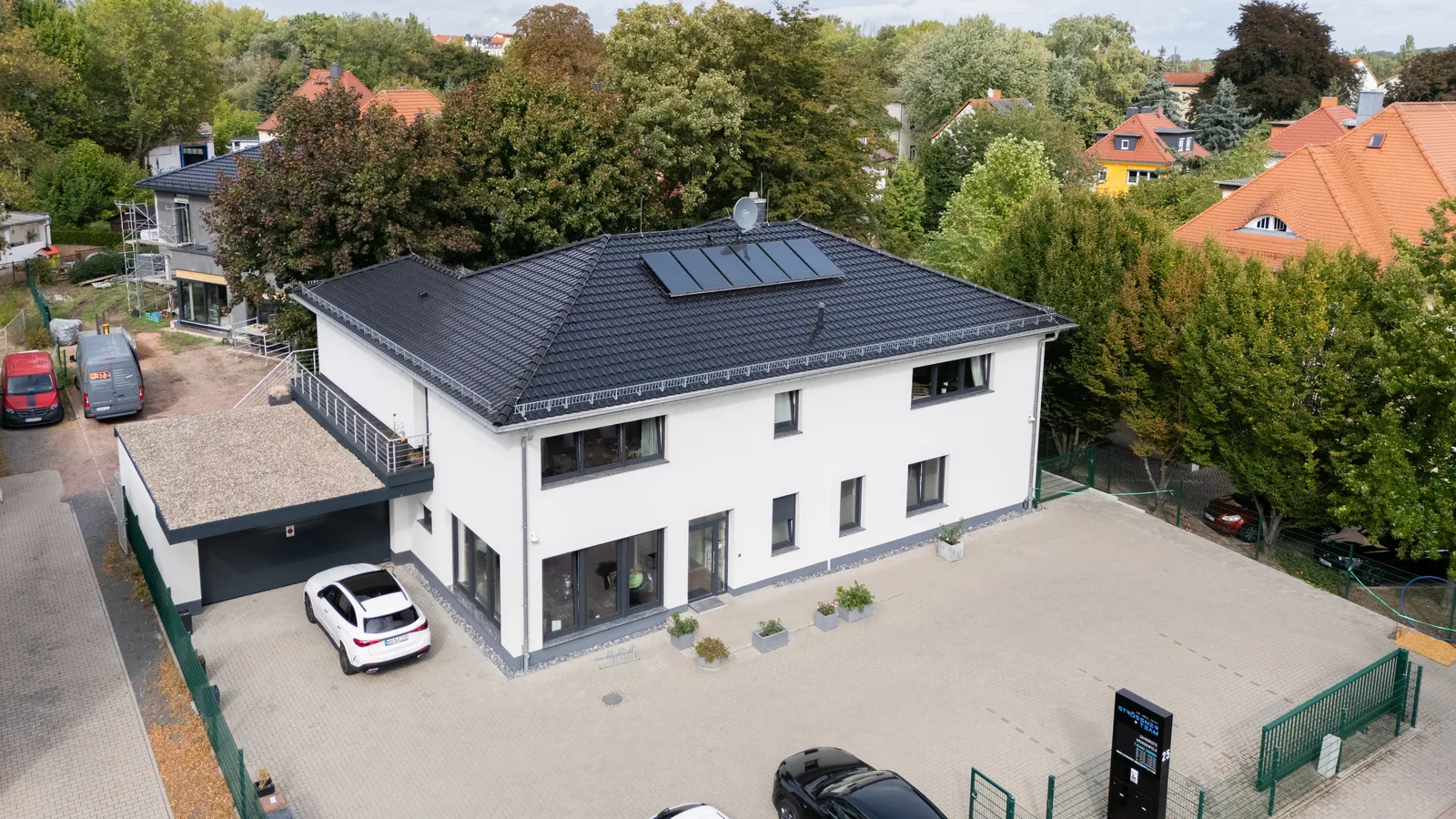
The Zahnkompetenzzentrum Dr. med. dent. M.Sc. Sandro Strößner is located at Leopold-Kell-Straße 25 in Weißenfels and is here for patients. The practice is easy to reach from towns in the Burgenlandkreis such as Hohenmölsen, Lützen, Teuchern, Naumburg, Zeitz, and the surrounding communities. Because consultation, diagnostics, the surgical procedure, prosthetic treatment, and aftercare all take place at a single location, there is no need to travel between several practices – a practical advantage, especially when things need to move quickly.
If you do not want to wait any longer, the next step is simple: call us, describe your concern and arrange a consultation appointment. We assess your situation professionally, show you the possible options and support you on the way to your dental prosthetics.

We know: the time that passes between the diagnosis “missing tooth” and the new implant is stressful for many people. Gaps cause neighbouring teeth to shift, the jawbone recedes, the smile changes.
What convinced me was the absence of marketing. No promises. Just planning, explanation, execution. I had eight implants placed and didn't even feel like I'd made a difficult decision.
At the Zahnkompetenzzentrum
about 40 minutes by car (A9)
Close to home, special focus on implantology
about 40 minutes by car (A9)
All Services at a Glance
No-Obligation Cost Calculator
Process, Technique, Immediate Treatment
Upload your cost plan, call-back within two working days
Computer-navigated implant placement in real time. See how an implant procedure takes place at our Zahnkompetenzzentrum.
This video contains no spoken content. The audio track consists solely of subtle background music — no spoken or meaning-bearing audio information is lost.
Answer a few short questions and you’ll immediately receive a transparent price range for your situation — complete with a clear breakdown and possible monthly instalment.
As a rule X-Guide 3D-navigated & minimally invasive. We plan your implant on the computer and, as a rule, place it with navigation to within a millimetre — through a particularly small, tissue-sparing access point. This extra effort is already built into every price.
You now know your approximate investment. In the information consultation we clarify which restoration makes sense for your case – and whether there might be a simpler way.
A no-obligation information meeting, without treatment. Examination, any necessary X-ray diagnostics and the written treatment and cost plan are carried out according to medical indication and charged under the GOZ; we tell you the costs in advance. You decide at your leisure.
A non-binding estimate for initial guidance only — not a treatment and cost plan, and no substitute for a personal consultation. The actual cost depends on your individual findings and is set out in a written treatment and cost plan showing the expected costs.
Get practical dental health tips and news from our practice — free, and you can unsubscribe at any time.
